

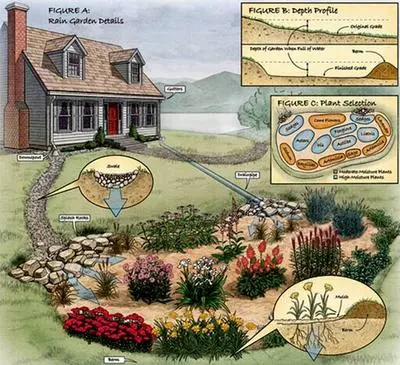
The benefits of rain gardens
Whether you live in the city or along a lake or river, managing stormwater runoff is important.
Rooftops, roads, driveways and sidewalks are hard surfaces that prevent rainwater and melting snow from reaching the soil and soaking into the ground. These hard surfaces also collect nutrient-rich yard and pet waste, oil and radiator fluid from autos, and other debris and pollutants
Runoff:
- Washes debris and pollutants away, often directly into lakes, rivers and wetlands.
- Erodes soil and carries it into our surface waters.
- Can affect aquatic life if warm runoff enters lakes and rivers directly. In summer, runoff is often warmed as it flows over hard surfaces.
Rain gardens:
- Collect stormwater runoff and prevent it from flowing directly into lakes, rivers and wetlands.
- Allow runoff to soak into the soil so sediments settle and plants absorb nutrients.
- Filter out pollutants from water before entering the groundwater.
- Prevent erosion by holding soil in place with their deep roots.
- Attract birds and butterflies.
- Require little watering and maintenance once established.
Design and placement
Rain garden designs can be simple or elaborate, depending on your gardening interest and experience. Before you start digging, it's best to sketch a design. You'll need to consider:
- Location of the garden.
- Size you need.
- Shape you want.
- Type of soil you have.
- Plants you’d like to include.
- How much runoff you typically have.
- You may need more than one rain garden to accommodate the runoff.
The mosquito myth
Contrary to popular belief, properly constructed rain gardens are not breeding grounds for mosquitoes. Mosquitoes need seven to 12 days to lay and hatch eggs. Rain gardens retain water for a few hours after a storm. In fact, birdbaths, storm sewers, and lawns are more likely areas for mosquito eggs than a rain garden. And, as an added bonus, rain gardens attract dragonflies, which eat mosquitoes.
Location
BEFORE YOU DIG, in Minnesota, contact Gopher State One Call at 811 or visit the website.
Several factors should determine the site of a rain garden:
- It should be located to collect water above the area where rain currently collects or runs off into a body of water. The objective is to slow or collect the run-off in the rain garden and allow the water time to percolate into the soil.
- Locate the rain garden at least 10 feet away from buildings to prevent water damage to foundations and basements.
- Locate it 35 feet or more away from a septic system drain field to avoid interrupting or impeding the drain field’s effectiveness.
- Chemicals, run-off from roofs, atmospheric deposits, and various nearby activities on the land can all pose contamination risks to drinking water. Protecting your well from potential contaminants helps ensure that your household has safe, clean drinking water.
- If you plan to apply fertilizers or pesticides to your rain garden or anticipate contamination from other sources, locate the rain garden at least 150 feet from your drinking water well, as recommended by the Minnesota Department of Health for agricultural chemicals.
- While Minnesota Rules don’t specify a setback for rain gardens, a minimum of 20 feet is required between a well and drainage features, such as French drains (MN Rule 4725.4450). For sensitive wells, this distance increases to 40 feet.
Shape and Size
Rain gardens can be designed in any shape. Crescent or kidney shapes are attractive. A long, narrow rain garden may be better if you're placing it between structures, such as a house and sidewalk.
The size of your rain garden will depend upon the size of the roof, driveway or other hard surface being drained.
- Typical rain gardens range from 100 to 300 square feet in size.
- Gardens will handle the runoff from a hard surface that is about three times their size.
- For larger surfaces, more than one rain garden may be needed to handle the runoff. For example, large roof tops may need a rain garden near each down spout.
Choose plants
Choose plants that:
- Are appropriate for the soil type in your rain garden.
- Will tolerate standing water for up to 48 hours.
Many native plant species are well suited for rain gardens. If you are constructing a rain garden near a lakeshore or riverbank, you may be required to use native plants, depending upon local ordinances. Check with your local Soil and Water Conservation District.
Building and planting
Construction can begin once the garden size, shape, location and plants have been decided.
- Lay out a rope or hose in the desired shape to use as a guide for digging.
- The depth may vary from 4 to 10 inches.
- For best infiltration, the bottom of the rain garden should be level.
- If your garden is placed on a slope, use the soil from digging to create a berm on the downhill side of the rain garden.
- Remove excess soil from the site.
Rain Gardens exemption
Rain Gardens are exempt from the nuisance violation city if it meets these four requirements: (1) planned, (2) intentional, (3) maintained, and (4) registered with the city.
Sourced from MN Department of Natural Resources & the University of Minnesota