
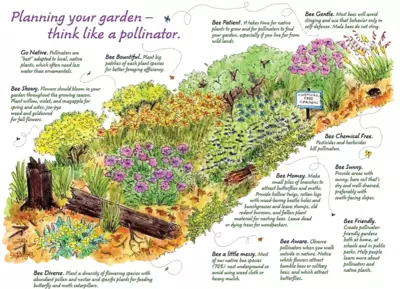
Pollinator habitats in Minnesota focus on providing native food sources (flowers blooming all season), water, and diverse nesting sites (bare ground, hollow stems, logs, bunch grasses) while reducing pesticides, with options ranging from "bee lawns" to larger restoration projects in parks, roadsides, and private yards, supported by organizations like the MN DNR, UMN Extension, and local groups promoting pollinator-friendly plants and practices like leaving gardens "messy" for winter shelter.
Bees are one of the most well-known pollinators, but there are a variety of other pollinators, including ants, flies, beetles and birds.
Contribute to pollinator-friendly environments.
- Plant flowers with pollen and nectar.
- Create habitat and nesting sites for pollinators.
- Eliminate the use of pesticides that are dangerous to pollinators.
Key Components of Habitat
- Food: Native plants for nectar and pollen, including flowers like Blazing Star, Wild Bergamot, and milkweed for monarchs. Trees and shrubs (Serviceberry, Willows, Currant) are also crucial.
- Nesting: Bare soil, dead wood, leaf litter, hollow stems, and bunch grasses (like little bluestem) provide nesting spots for solitary bees and overwintering sites for many insects.
- Water: A source of water is essential.
How to Create Habitat
- Plant Natives: Use a variety of native flowers, trees, and shrubs that bloom from spring through fall.
- Create a "Bee Lawn": Replace turfgrass with low-growing native plants like fine fescue, self-heal, or creeping thyme for easy maintenance.
- Allow Messiness: Leave leaves, stems, and seedheads over winter for shelter.
- Reduce Pesticides: Avoid chemicals that harm pollinators.
- Provide Bare Ground: Leave patches of bare soil for ground-nesting bees.
- Incorporate Wood: Leave dead logs and branches where appropriate for cavity nesters.
Where to Find & Create Habitats
- Your Yard: Create pollinator gardens, bee lawns, or plant native trees.
- Public Spaces: Partner with parks, cemeteries, golf courses, and businesses.
- Roadsides: Encourage less mowing and allow native plants to grow.
- Community Efforts: Cities like Minneapolis, St. Paul, and many others have passed pollinator-friendly resolutions.
Resources to help pollinators
Is your garden and yard pollinator-friendly ALL year ’round? This video (click HERE)shows you how to adjust your fall cleanup routine to help pollinators through the fall and winter and make your landscape home to native pollinators.
University of Minnesota resources:
- Annual flowers that attract pollinators
- Creating a butterfly garden
- Nests for pollinators
- Planting and maintaining a bee lawn
- Planting and maintaining a prairie garden
- Trees and shrubs for pollinators
- Benefits of native grasses
- Pollinators and their habitat - Minnesota Department of Agriculture
MN Department of Natural Resources:
- Minnesota's Pollinators
- Specialist Bees
- Native Bees of Minnesota
- Minnesota Pollinator Resources
- Minnesota Pollinator Resources Tables
Sourced from MN Department of Natural Resources & the University of Minnesota